
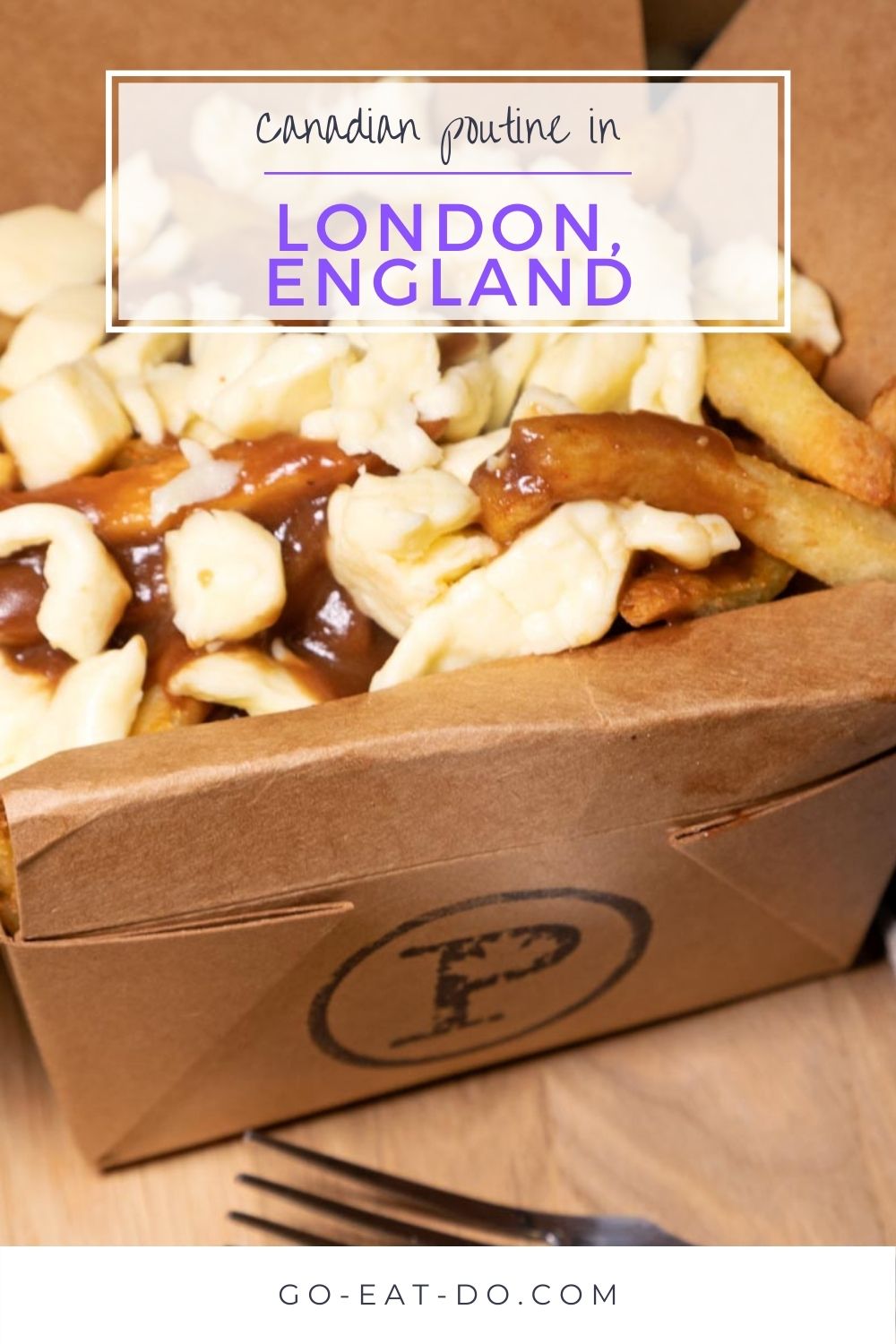
Stuart Forster interviews Paul Dunits, who in 2013 established The Poutinerie to serve Canadian poutine in London, England.
Disclosure: Some of the links and banners below are affiliate links, meaning, at no additional cost to you, I will earn a commission if you click through and make a purchase.
What is poutine? It’s comfort food that originated in the Canadian province of Quebec. Drummondville and Warwick count among the places that lay claim to being where poutine was first served, back in the 1950s.
The perfect poutine recipe
At its simplest, poutine is the heavenly alignment of gravy and cheese curds served over chips. It’s unfancy yet deeply satisfying soul food.
“What I need to do is get more people into poutine because there are still so many people who don’t know what it is,” says Paul Dunits, who hails from Toronto, Ontario.
At its most opulent, a poutine recipe may feature luxury ingredients such as lobster or foie gras.
In the province of Quebec, it’s regarded as a dish to savour after a boozy night out in the likes of Montreal. Poutine has the reputation of being the perfect thing to eat to offset a hangover. Buying a portion may even bring a cheeky morning-after bonus of leftovers for breakfast.
Many people now regard poutine as Canada’s national food. Inhabitants of the province of Quebec may take issue with that and argue poutine is a Quebecois delicacy rather than Canada’s national dish.
Paul Dunits, a Canadian, had been working in the United Kingdom as a chef for seven years before establishing his own street food business, The Poutinerie.
In 2013 few restaurants were serving poutine in Britain, other than a handful of establishments with Canadian sous chefs.
Canadian poutine
Paul first tried a version of poutine three decades ago while working part-time in a burger restaurant in his native Ontario.
Toronto, the largest city in Ontario, is less than six hours’ drive from Montreal, which could well be regarded as the poutine capital of Canada.
“When you get older you can drive to Montreal for the weekend. The drinking age is a year younger there. We would take a lot of trips to Montreal and we could actually get tickets for Leaf games,” recalls Paul, referencing the Toronto Maple Leafs ice hockey team. “To go to Montreal and experience the Toronto-Montreal rivalry was a very cool thing to do for a weekend.”
“That’s when I really experienced poutine first-hand, along with Montreal smoked meat,” he says.
After moving to London – the one in England rather than its namesake in southwestern Ontario – Paul explored the city by visiting markets with his wife.
Poutine as street food
“My wife, being a little more driven than me, looked at the stalls and how busy they were and said, ‘Why don’t you think about doing street food? You’d be really good at it. You’re a very personable person and you’re a great chef,’” reveals Paul about a conversation that preceded a brainstorming session.
“Being Canadian, I wanted a Canadian angle. When we were writing a list of Canadian food, it wasn’t very long,” he laughs. “You’ve got maple syrup, salmon from the coast and Canadian back bacon. I played around with the idea of maybe a Canadian back bacon sandwich. Poutine was on the list.”
With the idea of doing street food, Paul took a trip home to Toronto: “When we landed, it had probably been two or three years since I’d been back and poutine was on every menu. There was even a chain called Smoke’s Poutinerie. That wasn’t the case when I left 14 years ago. I thought, ‘Wow, when did poutine become so popular in Toronto?’ That put it in the back of my mind.”
While driving to visit his parents, who now live outside of Toronto, Paul noted farms advertising their cheese curds via roadside signs.
“In Ontario, I had never seen that. In Quebec, sure, everywhere. That’s when I thought, ‘I’m going to try to make poutine when I get back to London’,” says Paul of his decisive moment of inspiration.
Back in England, Paul approached dairies in London for cheese curds. Initially, he sourced curds from Neal’s Yard as he began to sell poutine in London.
Sundays at Brick Lane Market
“I started small, doing markets; Brick Lane on Sundays and other markets around London. It grew pretty quickly,” says Paul of his experience selling street food in London.
“One of my best markets was on the last Wednesday of the month at New Street Square, close to the law courts behind Fleet Street. Come 11:30 am, the queue was already 20 people deep. By 12 o’clock it was 40 to 50 deep. I was busy until I sold out or it petered off at 1.45 pm,” says Paul.
Experience of selling street food in London has resulted in Paul observing how a queue can be good for business: “When people see a massive queue they think it must be good. It’s a double-edged sword. When it gets too long, people don’t want to wait – it’s a lunch hour and they’ve only got so much time.”
Operating The Poutinerie required Paul to adapt his mindset away from that of a chef working in a traditional kitchen. He learnt the benefit of thorough prepping before opening for business.
“The beautiful thing about poutine is it can be very quick to assemble because all the hard prep is done beforehand,” he observes. “You’re stuck in a little stall but you can do quite a lot as long as you’re organised and well prepared.”
Tastiest toppings with poutine
At first, The Poutinerie offered a coq au vin topping with its poutine. Paul believes that is the chef in him coming to the fore. The coq au vin took a significant amount of preparation, so he looked towards other toppings.
“At Brick Lane Market there’s another trader called The Rib Man. People were getting his rib meat in a bun then my poutine as a kind of combination. We became mates and I approached him to buy his rib meat and hot sauce to do a combo. I ended up moving into his kitchen as well, helping each other out,” says Paul.
“In my experience, the best thing that goes with poutine is a long slow-cooked meat because when you’re eating it, you want to get a forkful of everything. Say you had a steak sliced up on top of the poutine, that complicates things. If you have slow-cooked meat that’s tender, you can get a little bit of everything; a stew or bourguignon works well. Slow barbecued meat adds another dimension because you get the smoky flavour. For me when you have hot sauce on it too, it ticks all the boxes and hits every flavour profile on your tongue – it’s perfection!” he adds.
What is poutine, eh?
Britons unfamiliar with poutine may be tempted to confuse the Canadian dish with chips, gravy and cheese.
“There’s always the argument that poutine is just chips, cheese and gravy and that they’ve been doing it up in the north of England forever,” jokes Paul.
“For so many years I’ve been copping a bit of flak because I’m from Toronto and not Montreal. My grandparents are from the Isle of Man. My brother went there to visit and sent me pictures. They have cheese, chips and gravy on their menus. I think it might be a national dish for them there,” adds Paul, laughing. “So now I’ve got some credibility because the reason why I’m allowed to be here is because I’m on an ancestral visa. I guess I have every right to do chips, cheese and gravy.”
How to serve poutine
Paul has found that people like their poutine served in a variety of ways. For some diners, the gravy and curds should be below the chips. Others like them served on top.
Some like the box closed for a few minutes before eating the poutine. Others like the gravy and topping served separately from the chips so that the chips remain crispy.
Ultimately, there’s no wrong way of serving it.
Katherine Ryan on Sunday Brunch
“The response we’ve had to our poutine has been tremendous. Just recently Katherine Ryan was on Sunday Brunch,” says Paul, referencing the popular Channel Four television show hosted by Simon Rimmer and Tim Lovejoy.
“When they came back from the commercial, my boxes and logo were sitting on the table. Katherine and the two hosts ate it and were talking. It was only 15 seconds but it was her lockdown treat; poutine and that you have to say it with a French-Canadian accent and that you can get it from The Poutinerie and they’ve been shipping during the lockdown,” he says of the exposure on television.
Further information
Thank you for visiting Go Eat Do and reading this post about Canadian poutine in London. The delicacy originated in the province of Quebec. Please take a look at this post about poutine in Montreal and Quebec.
Stuart Forster, the author of this post, has travelled widely in Canada. An award-winning travel writer, Stuart was presented with the 2017 British Annual Canada Travel Award for Best Online Content.
Take a look at the Destination Canada website to plan travel to Canada and eat poutine in the country where it was first made.
If you enjoyed this post, please sign up for the free Go Eat Do newsletter.? It’s a hassle-free way of getting links to posts once a month.
‘Like’ the Go Eat Do Facebook page to see more photos and content.

Charlotte
October 11, 2020 at 11:24I absolutely love Poutine! This is such a helpful blog post! I’ve saved this for my next visit!
Go Eat Do
October 13, 2020 at 14:38It’s such a good comfort food. Don’t forget that you can order it to make at home if it’s going to be a while before you head to London.