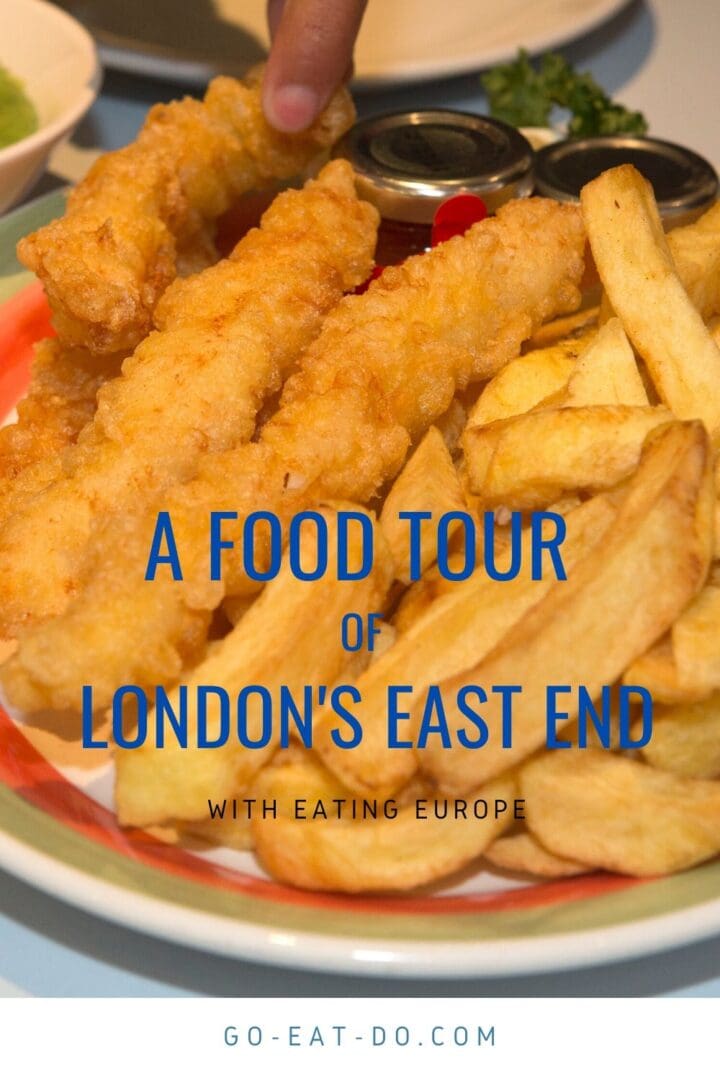
Stuart Forster reports on the experience of participating in Eating Europe’s London East End Food Tour.
Disclosure: I was invited to participate in a London East End Food Tour by Eating Europe, which did not review or approve this post. Some of the links and banners below are affiliate links, meaning, at no additional cost to you, I will earn a commission if you click through and make a purchase.
“It used to be a dirty little secret,” says Emily, my guide, outside of Old Spitalfields Market at the start of our East End Food Tour of London. She’s talking about the district rather than Eating Europe’s culinary walking tour, which has been operating since 2014.
Joining a London East End Food Tour
The area that once lay outside London’s city walls used to be shunned by tourists. Times, though, change. Hipsters made Shoreditch theirs years ago, renovating or gentrifying the district, depending on your point of view. The redevelopment of Liverpool Street Station also brought modernisation. This walking food tour of the East End is a way of gaining an overview of the area and food and drink traditionally enjoyed by Londoners.
Increasingly, people are seeking experiences that provide insights into the destinations that they visit. Consequently, food tourism is on the rise. Several companies now offer food tours in London, including Eating Europe.
Hipsters, says Emily, are merely the latest wave of people to make their mark on the East End. French Huguenots, Irish, Jewish and Bangladeshi settlers have all contributed to the evolution of the area and the food eaten within it.
Guided Food Tour Of London’s East End
“The history reflects the food,” she says, adding that the tour we’re about to take is all about authentic dishes rather than gourmet cuisine.
Like one of the Barbary lions that, long ago, were kept at the Tower of London, my stomach roars in anticipation of being fed. It’s 10.00 am and I haven’t had breakfast. Talking about food is making me acutely aware that I’m hungry.
Rain begins to tumble from the grey sky that broods over the British capital. Emily suggests we head to St John Bread and Wine (94-96 Commercial Street, E1 6LZ), a welcoming, unfussy restaurant with parquet flooring. It’s the first of eight places that guests on Eating Europe’s London East End Food Tour will tuck into produce.
British cuisine in London
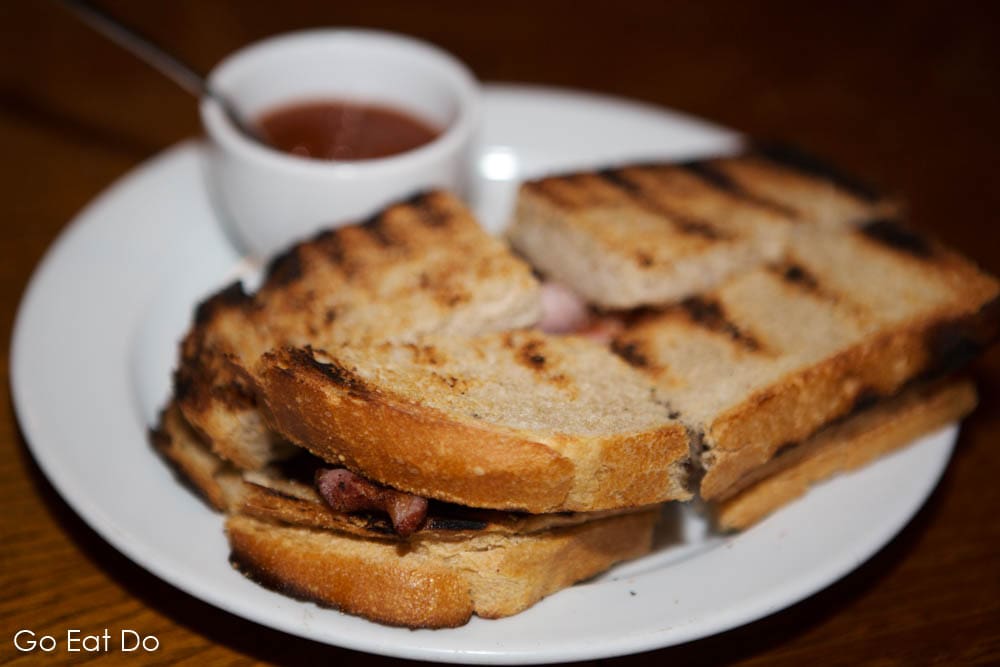
St John Bread and Wine’s menu changes frequently and is displayed on a chalkboard. The bacon sandwich that we’re about to taste is a staple. Breakfast is served here from 9.00 am to noon. Fergus Henderson’s ‘nose-to-tail’ ethos of cooking means dishes are served with flavourful cuts of meat such as tongue and cheek—ingredients that fell out of fashion long ago in many dining establishments.
The bacon we’re eating comes from Gloucester Old Spot pigs reared at Butt’s Farm in Gloucestershire. The meat is soaked in brine for two weeks, then in salt and sugar for a further fortnight, before being smoked. Chargrilled, the bacon is served with butter and fruity home-style ketchup. It’s a proper bacon sarnie.
Jack the Ripper’s hunting ground
With the edge taken off my hunger, I follow Emily past The Ten Bells pub. Long ago, women who were murdered by Jack the Ripper socialised in the pub between meeting their clients.
The Market Coffee House and Bar (50-52 Brushfield Street) is Spitalfields’ oldest dwelling. Dating from the 17th century, the building survived the Great Fire of London.
Before eating, we pop upstairs to look inside the building’s wood-panelled function room.
Street art in East London
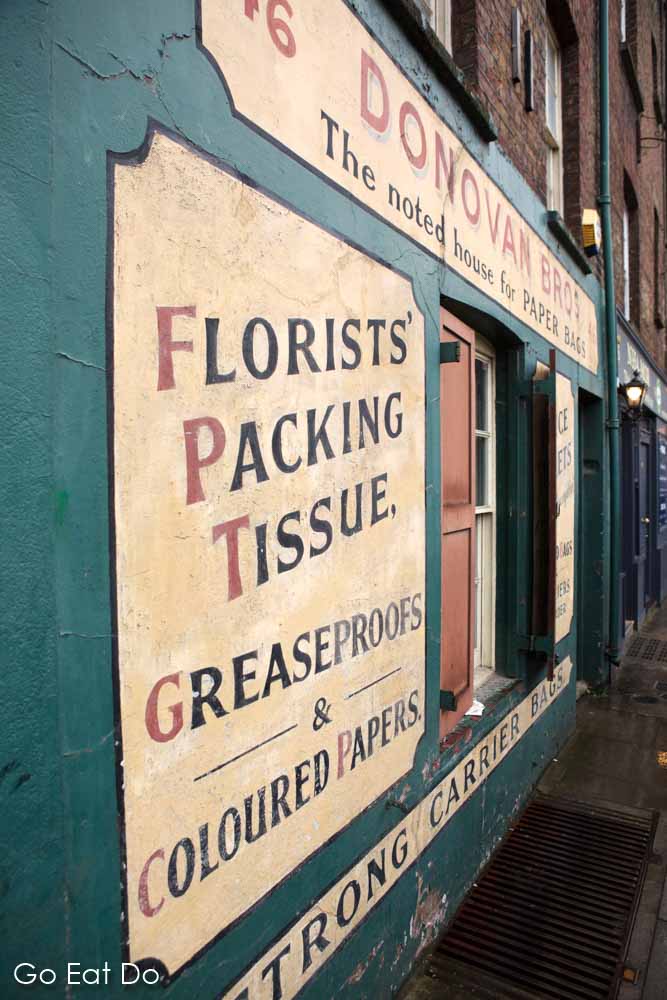
Emily points out the hand-painted signage of the Donovan Bros. paper shop as well as street art on walls and traffic signs.
In Brune Street, we pause outside a former soup kitchen which operated until 1992. The ornate façade dates from 1902 and states it was established ‘for the Jewish poor’. Persecution in eastern Europe caused London’s Jewish population to swell from 46,000 in 1880 to over 135,000 20 years later.
As I’m discovering, this tour is providing fascinating insights into the social history of East London. We wander through Artillery Passage to Gun Street, names that hint at the area’s former military use. King Henry VIII used to shoot here.
The German bombs that fell during the Second World War and post-war rehousing brought major changes to the East End.
Fish and chips in London
In recent years, immigration to Britain and Europe has become a point of political discussion. It was a key issue in the Brexit referendum. Yet on entering Poppies Fish and Chips (6-8 Hanbury Street, E1 6QR), Emily suggests that British people might not have had their national dish without immigration.
In 1860 Joseph Malin, a Jewish immigrant, came up with the idea of serving battered fish with fried potato chips — an inexpensive snack popularised by Belgians.
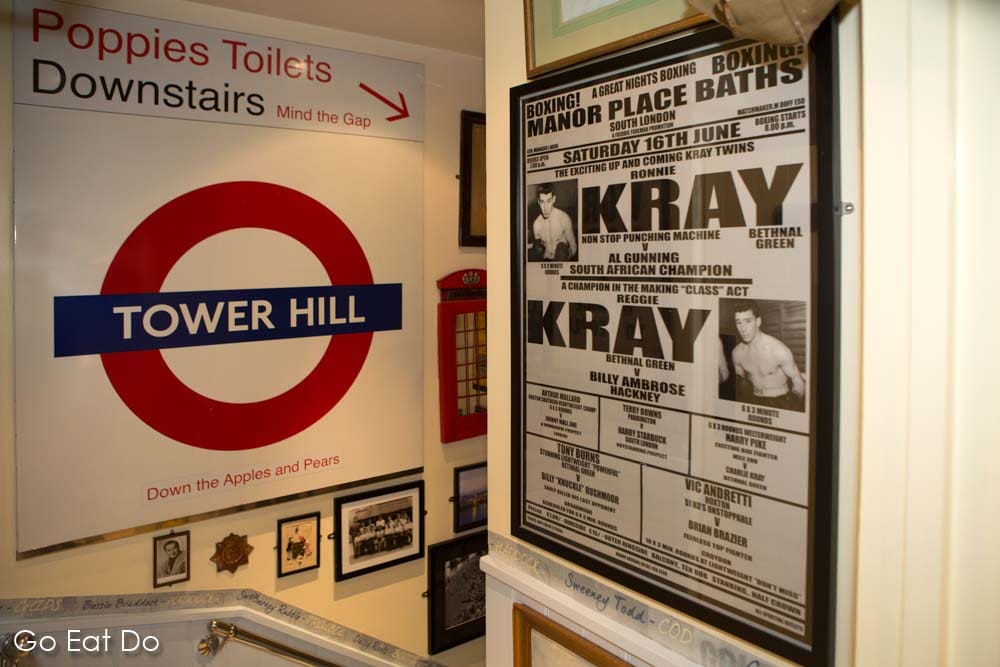
Framed pictures adorn the walls of Poppie’s, which was founded in 1952. On the way down the ‘apple and pears’—stairs in anything other than Cockney rhyming slang—to the loos, I spot a boxing poster advertising bouts featuring Ronnie and Reggie Kray.
Poppies’ chips, which are fried in peanut oil, prove knockout. I’m surprised by the light, crisp batter on the fish sourced from Peterhead. For the first time in my life, I’m eating good fish and chips in London—as a northerner who appreciates the dish, it’s something I’d long doubted could be found in the British capital.
A pint of London beer
Protestants escaping persecution from 17th-century France were known as Huguenots. Many of those immigrants to East London were skilled silk weavers. They worked in airy attic rooms in and around Wilkes Street.
Emily explains how they introduced the idea of using hops in beer to southeast England. The Truman Brewery, whose bridge crosses Brick Lane, was once one of the East End’s biggest businesses. These days its premises host food stalls on Saturdays and a market on Sundays.
We taste a glass of beer brewed by the resurrected Truman Brewery at the Pride of Spitalfields (3 Heneage Street). It’s a proper London boozer serving snacks and a good range of hand-pulled ales and ciders.
I could easily stay longer on the comfy red banquette but Emily has other ideas. She leads us back to Brick Lane and the strip she describes as “the Las Vegas of curries”. She reveals that there were 56 curry restaurants in the area when she last counted them.
Curry in Brick Lane
As we pass Brick Lane Mosque, our guide mentions that the premises have formerly served as a church and as a synagogue.
While sampling vegetable bhuna, slow-cooked lamb and chicken Madras at Aladin (132 Brick Lane, E1 6RU), I make a note to remind Go Eat Do’s readers to turn up to this tour prepared to eat.
London’s best beigel
The penultimate dining stop on Eating Europe’s London East End Food Tour is Beigel Bake (159 Brick Lane, E1 6SB), whose sign states the unpretentious shop is open 24 hours a day, seven days a week. As we queue, Emily informs us that around 3,000 bagels are served every day. She points out Sammy, the owner, overseeing his employees.
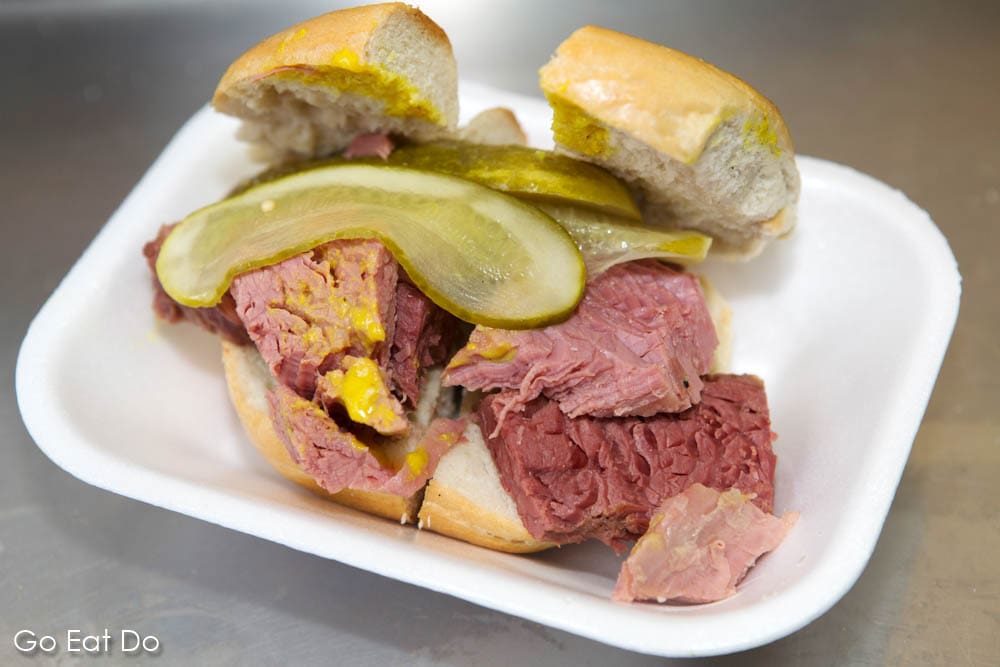
I order a plain bagel with salt beef that’s been boiled for four hours. It is served with a gherkin and mustard. Though I’m no longer hungry, it’s testimony to the tastiness of this dish that I would happily have another.
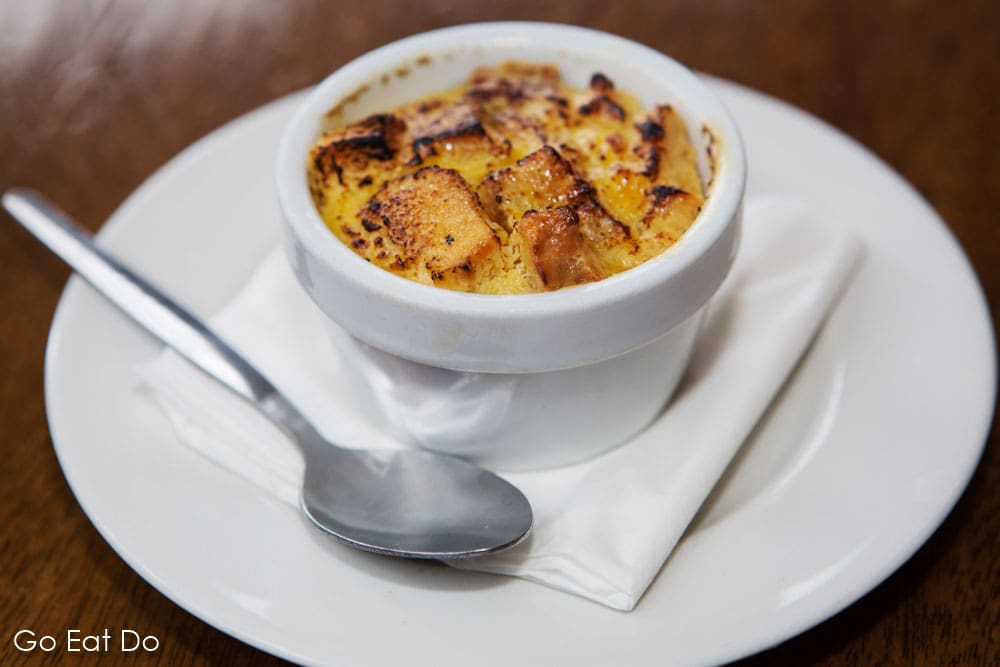
Instead, we stroll past street art and the Boxpark’s pop-up shops and food stalls on our way to Pizza East (56 Shoreditch High Street, E1 6JJ). The popular restaurant has a tiled bar area, which we sit in for salted caramel tart and a cup of tea.
Leaving me suitably stuffed, and bursting with information about East London’s street art and social history, Eating Europe’s London East End Food Tour reaches its conclusion. A lengthy afternoon walk will help me digest both.
I enjoyed participating in Eating Europe’s London East End Food Tour and would happily join other tours organised by the company.
Booking Eating Europe’s London Food Tours
Book onto a London food tour by visiting the Eating Europe website. A twilight tour of Soho and a Borough Market and London Bridge tour are also among the options.
The London East End Food Tour is scheduled to last around three-and-a-half hours.
Map of East London
The Eating Europe food tour of East London that I participated in started at Spitalfields Market:
Useful tips for a London food tour
Based on my experiences, you may find the following tips handy:
- Don’t eat ahead of participating in the guided food tour. I thought that plenty of food was served during the tour.
- Pack a backpack with a raincoat or umbrella. London’s weather is notoriously changeable and it makes sense to be prepared for rain. Bringing a pullover or hoody might also make sense.
- Wear comfortable shoes for the guided walking tour. The tour is conducted at a gentle pace but covers a significant distance, so comfy footwear makes sense.
- Bring a camera and notebook to record key points along the way.
Hotels in London
Search for accommodation in London’s East End using the map below:
Books about London
Planning a trip to London? The following books about Britain’s capital city are available from Amazon.co.uk:
Joolz Guides: Rather Splendid London Pub Walks by Julian McDonnell. (You can read an interview with Julian here on Go Eat Do.)
London: A Guide for Curious Wanderers by Jack Chesher.
Further information
Visit London’s website has ideas about places to visit, tours and accommodation in the UK’s capital city.
Thank you for visiting Go Eat Do and reading this post about participating in Eating Europe’s London East End Food Tour. If you are planning a trip to London, you may appreciate this look at fun things to do in Covent Garden.
Stuart Forster, the award-winning travel writer, was the author of this post. His work has appeared in Food and Travel and other magazines.
Enjoy this post about a Food Tour of London’s East End? If you’d like to see more of my work about food tourism, you may be interested in reading my post about a culinary rickshaw tour of Bari and a food tour in western Newfoundland, Canada.
If you enjoyed this post, please sign up for the free Go Eat Do newsletter. It’s a hassle-free way of getting links to posts on a monthly basis.
‘Like’ the Go Eat Do’s page on Facebook to see more photos and content.