
Stuart Forster reports from Akagera National Park, Rwanda’s largest game reserve. The national park is in the country’s north-east
Some of the links below and banners are affiliate links, meaning, at no additional cost to you, I will earn a commission if you click through and make a purchase.
Akagera is Rwanda’s largest national park. Its undulating landscape spans 1,122 square kilometres (433 square miles) of swamp, uplands and savannah habitat in northeast Rwanda.
A two-and-a-half-hour drive from Kigali, this African game reserve is noted for its broad biodiversity. The park is named after the Akagera River. That tributary of the Nile snakes along the national park’s eastern border.
The highest point of Akagera National Park is in the Mutumba Hills. From that elevated point, 1,825 metres (5,988 ft) above sea level, you can see all the way to the volcanoes of the Congo on a clear day. Gazing into neighbouring Tanzania is also an option.
Akagera National Park
In April 2010, the Akagera Management Company took control of the park. The company is a joint venture between African Parks and the Rwanda Development Board. It has a long-term vision to rehabilitate the park and make it a sustainable tourism attraction.
Jes Gruner was appointed as Field Operations Manager. His partner, Sarah Hall, became the Marketing and Tourism Development Manager. Together they oversee the development and day-to-day running of the national park.
The preceding era was turbulent. The couple took over facing a major challenge. During the mid-1990s, in the wake of Rwanda’s civil war, people settled much of Akagera’s fertile savannah, converting it to farmland. The national park extended beyond 2,500 square kilometres (965 square miles) when it was founded in 1934.
In 1997, the park’s boundaries were reassessed. Its area was reduced by more than half.
Poaching had become a major threat to several species. The park’s last lion was poisoned in 1994. The big cats were successfully reintroduced in 2015. That follows the precedent of Masai giraffes being successfully introduced to the park in 1986.
The last member of Akagera’s original black rhinoceros population, which numbered more than 50 during the 1970s, was killed in 2007. Following a 10-year absence, eastern black rhinos were reintroduced to Akagera in 2017.
Changes in Akagera National Park
Significant improvements were needed to prepare the infrastructure of Akagera National Park. Administrative buildings were erected, including a new reception and visitor information centre at the park’s southern gate.
A workforce of 180 locals was employed to undertake tasks, including readying the park’s road system for an influx of visitors.
Ninety people worked to build accommodation and the communal dining area of Ruzizi Tented Camp, overlooking Lake Ihema. The eco-friendly camp opened in 2012, featuring seven tents with en-suite bathroom facilities.
Involving the local population is essential for the park’s long-term welfare.
“They have been involved in helping to repair the dirt road to the park on Umuganda (a form of community service which involves everyone in Rwanda) days and get involved through the community conservation team, who hold conservation education sessions with school children and discuss issues about the park with village leaders…There have been cases where the community have come forward and reported incidents of poaching. It is heart-warming to know that they want to help and understand the importance of helping to protect their park,” says Sarah.
In 2012, Akagera draw 23,048 visitors. That number almost tripled by 2025, climbing 67,661. Almost half of those people were Rwandan nationals.
Five per cent of the total revenue generated by tourism is set aside to fund projects for improving community infrastructure and small enterprises. “It is important the local community can see tangible benefits from the park to gain their support for the conservation activities within,” explains Sarah.
animals in akagera national park
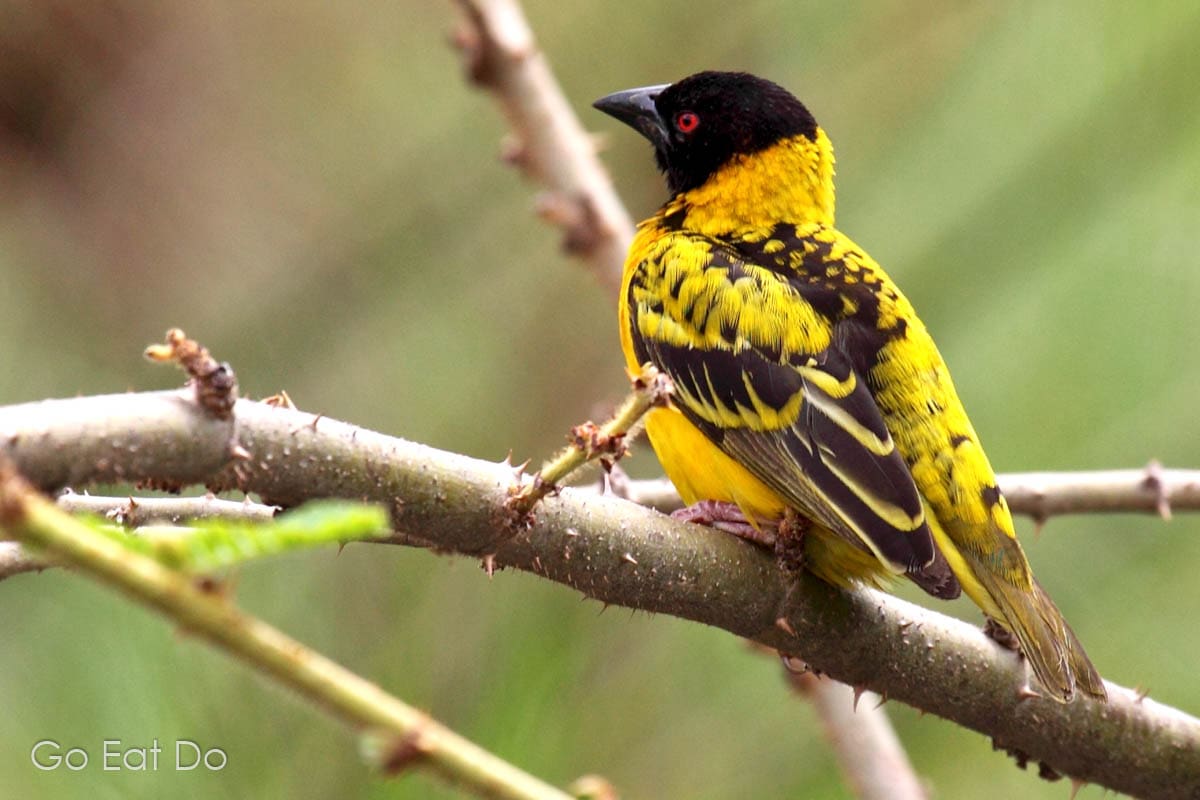
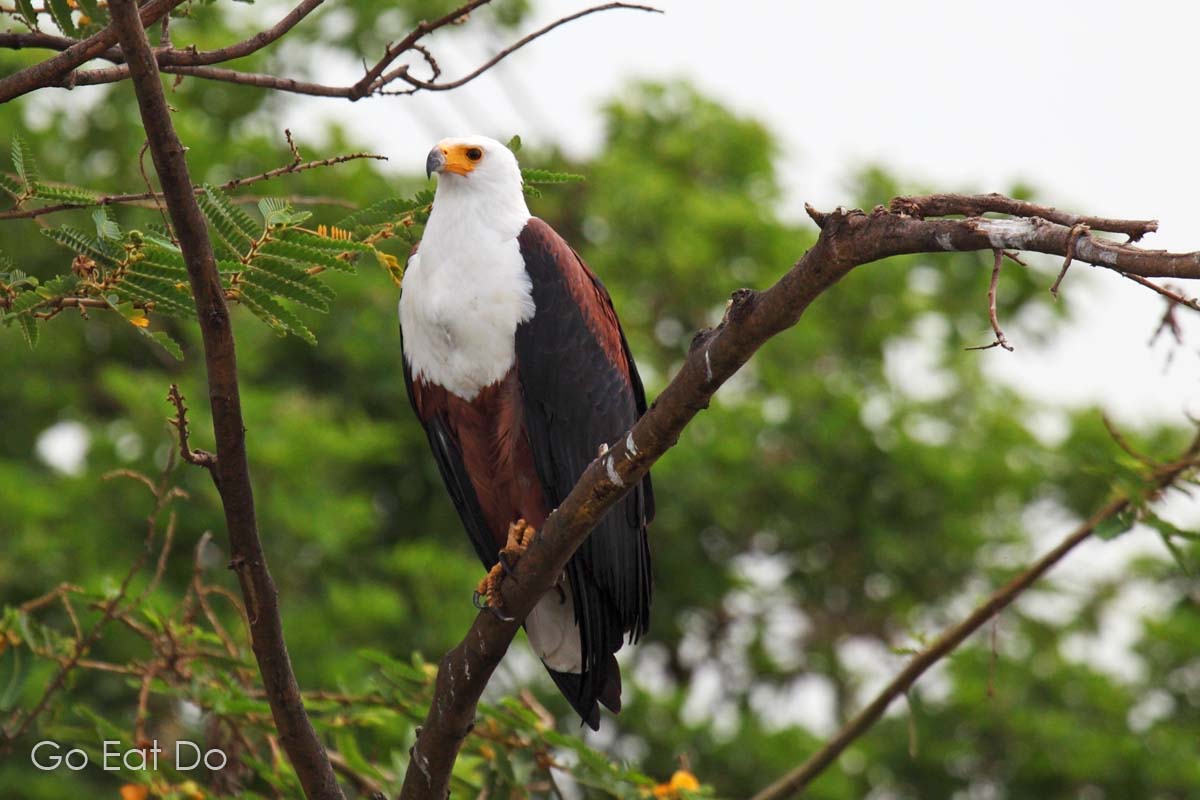
Akagera’s birdlife is one of its chief attractions. 527 species have been spotted within the park, including the graceful African fish eagle and rare papyrus canary. The park is home to central Africa’s largest protected wetland and is remarkable for its dense papyrus growth.
In 2012, boat safaris were introduced on Lake Ihema. The body of water has a sizable population of hippopotamuses and Nile crocodiles.
Tours last approximately an hour and can be booked on arrival in the national park.
A 120-kilometre (75.5-mile) long electric fence was built along Akagera’s western and southern boundaries. The solar-powered fence is patrolled as an anti-poaching and conservation measure.
The fence helps manage conflict between wildlife and humans on the edge of the park. Without it, wild animals could stray from the park to graze on farmland. This puts people in danger. It also puts wildlife at risk if farmers are tempted to take action to protect their land, livestock and families.
The fence was a prerequisite for black rhinos and lions to be reintroduced.
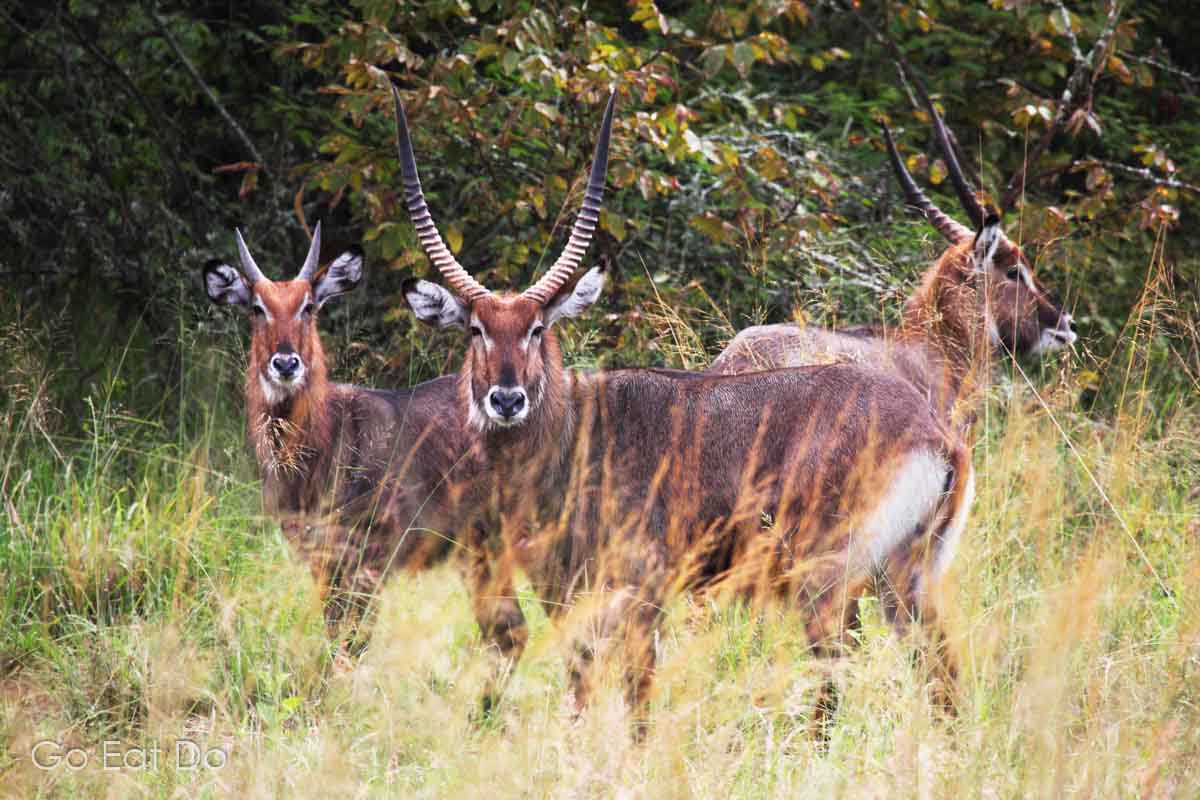
It’s possible to view all of Africa’s Big Five game creatures in Akagera National Park, They are lions, leopards, elephants, rhinoceroses and Cape buffalo . The mixed habitat is also inhabited by hyenas and sitatunga antelopes.
Akagera National Park map
Looking to visit Akagera? The Google map below shows the location of Akagera National Park:
Travel to Rwanda
RwandAir operates direct flights between London Heathrow and Kigali.
Brussels Airlines operates flights from London Heathrow to Kigali via Brussels. Kenya Airways flies between London and Kigali via its Nairobi hub and Ethiopian Airlines does so via Addis Ababa.
Hotels in Akagera National Park
Search for hotel rooms and other Akagera National Park accommodation using the map below:
Akagera National Park Prices
Practical information about visiting is on the Akagera National Park website. In 2026, the entry fee per day or night is $100 per adult for international visitors. It is $150 for two days and $200 for three. For children aged between six and 12, the fee is £50 for one day, $75 for two days and $100 for three. From four to seven days, no additional fee is levied.
Rwandan and East African adult visitors must pay 15,000 Rwandan francs for one day/night, RF22,500 for two nights and RF30,000 for three.
Adult visitors from elsewhere in Africa must pay $50 for one day/night, $75 for two or $100 for three,
Books about Rwanda
Thinking about travelling to Rwanda? You may find the following books about the country worth reading:
The Bradt Guide to Rwanda with Eastern Congo.
An Ordinary Man: The True Story Behind Hotel Rwanda by Paul Rusesabagina.
We Wish to Inform You That Tomorrow We Will Be Killed With Our Families by Philip Gourevitch.
Useful travel information
Discover more about Akagera National Park on the African Parks website.
The Visit Rwanda website has information about tourism attractions in the central African country.
Further details
Thank you for visiting Go Eat Do and reading this post about Akagera National Park, Rwanda. You can find other posts about Rwanda on this website, including an overview of what to expect while gorilla trekking in Rwanda.
Stuart Forster, the author of this post, is an award-winning travel writer. His work has been published by National Geographic Traveller, Rough Guides and The Telegraph.
Photographs illustrating this post are by Why Eye Photography.
If you enjoyed this post, please sign up for the free Go Eat Do newsletter. It’s a hassle-free way of getting links to posts once a month.
‘Like’ the Go Eat Do’s page on Facebook to see more photos and content.
A version of this post was initially published on Go Eat Do on 18 April 2013.

Afritrek
October 26, 2021 at 18:06One thing I like Akagera is the simplicity in finding and spotting wildlife. I’ve been to different East African national parks but many parks require long game drives to spot wild animals.
Thanks for sharing great insights!!
Go Eat Do
July 19, 2022 at 10:11Thank you for your kind words. Yes, the animal viewing in Akagera was impressive.