After enjoying the flavours of new Where The River Bends dips, Stuart Forster puts questions to Alan Hamilton Jr, a director of the Durham-based business that makes the vegan and allergen-free dips.
Disclosure: Some of the links below and banners are affiliate links, meaning, at no additional cost to you, I will earn a commission if you click through and make a purchase.
Founded in 1978, Durham Foods is named after the city in northeast England where its founder, Alan Hamilton Snr, grew up and lives. Durham Foods introduced its Where The River Bends brand in 2019.
Where The River Bends dips
The five core flavours of Where The River Bends dips are Red Pepper and Smoked Paprika; Green Jalapeno, Coriander and Lemon; Chilli and Lime; Lemongrass and Ginger; plus Garlic and Lemon. I enjoyed dipping into them with raw vegetables and tortilla chips. They also proved a tasty addition to sandwiches and wraps.
“Our new dip range was born from a simple but exciting idea. Alan Hamilton Snr, the heart of our third-generation family business, asked the question: ‘What if we could take the tradition of our beloved pease pudding and give it a modern twist?’ That spark led us to experiment with new flavours, reimagining a heritage product for today’s tables,” explains Alan Hamilton Jr about their origin.
“Jamie, our factory manager, brought his cheffing background and food technical expertise into the kitchen, where he experimented tirelessly with flavour combinations and textures. The result is a collection of dips that are bold, vibrant and exciting flavours that feel indulgent but remain true to our roots in simple, nourishing food,” he continues.
Pease pudding
Durham Foods produces 3.2 million tubs of pease pudding a year. It’s a popular ingredient in stottie sandwiches and savaloy dips. Both are dishes associated with the northeast of England.
Yet pease pudding was formerly consumed across England. Famously, it is the subject of the nursery rhyme Pease Pudding Hot. “Some like it hot, some like it cold/Some like it in the pot, nine days old,” say the lyrics, which were first published in 1760. Pease Pudding is also mentioned in the musical Oliver! The Musical, based on the novel Oliver Twist by Charles Dickens.
Yet the first written mention of pease pudding is in The Forme of Cury, a 14th-century recipe book. Dry split peas were seasoned and made into a type of pottage in a cauldron. Over time, a pudding cloth was introduced to cook the ingredients.
“Although it is most strongly linked with the northeast of England today, pease pudding once had a much broader presence. In the years before the Second World War, pease pudding shops could be found alongside pie-and-mash houses and fish-and-chip shops,” says Alan. “In 1901, the novelist and historian Sir Walter Besant described the everyday menu of a typical east London eatery: fried fish with pickles, meat pies, German sausages, blood pudding, and, notably, pease pudding with saveloys.”
Pease pudding recipe ideas
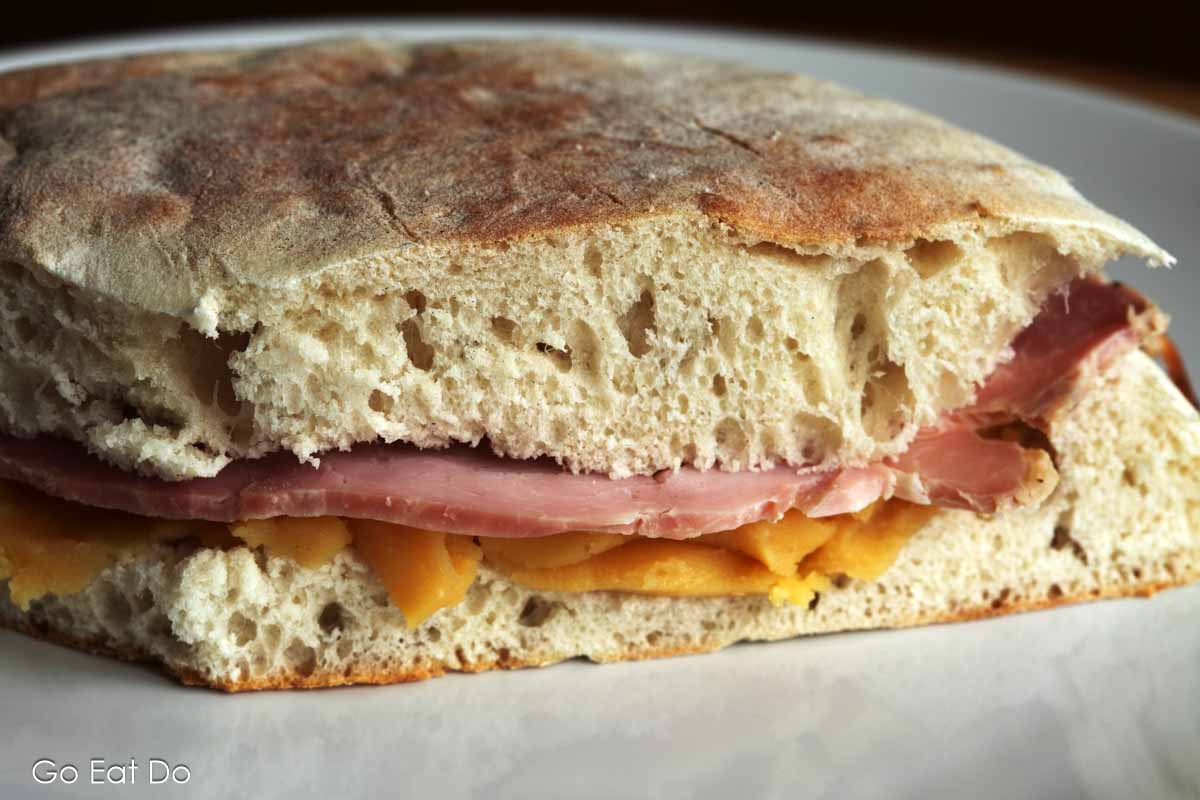
Alan explains that pease pudding can be enjoyed in a variety of different ways: “It’s such a versatile product, meaning you can enjoy it hot or cold, as a spread or on a salad, as an ingredient to thicken up soups and curries, or even with a spoon straight out of the tub. Of course, the famous northern way to enjoy pease pudding is to take a very generous amount onto a knife, spread onto a stottie base, top with ham and pop the stottie lid on. The question is, do you spread your pease pudding onto the stottie or on top of the ham?”
In recent years, some Slimming World members have mixed Durham Foods’ pease pudding with egg to create a pie crust alternative to pastry. Additionally, some have used it as the base for a cookie dough.
Pease pudding has always been popular with the older generation, who remember their mams making it from scratch in the kitchen, the ‘old-fashioned way’– boiling the yellow split peas inside a muslin cloth, in a cooking pot over the stove, alongside a ham shank,” says Alan, who believes that the dish is going through something of a renaissance. “In recent years, the convenience of buying it ready-made to spread straight onto a stottie has become increasingly more popular. Our pease pudding is also vegan-friendly, as Alan Snr decided to omit the ham stock, but without losing any of the traditional taste of the good ‘old-fashioned’ pease pudding recipe.”
Pease pudding-inspired dips
Where The River Bends dips are based on yellow peas.
“For us, it’s about bringing people together around food that’s full of flavour, steeped in tradition and made for modern life,” says Alan. “One of the biggest challenges has been taking something rooted in tradition, like our pease pudding, and reimagining it as a modern dip without losing its authenticity. Developing bold new flavours that are exciting but still natural has taken a lot of testing and refining. We also need to ensure our dips are not only delicious but completely allergen-free and vegan, which means carefully sourcing ingredients and producing them in a strict allergen-controlled environment.
“The most appealing thing about our dips is how versatile they are. The consistency of the product is somewhat between a dip and a spread, so you can enjoy dipping sliced veg – like carrot sticks and cucumber – straight into the product, or use it to spread on wraps or sandwiches as an alternative to mayonnaise.”
Vegan and allergen-free dips
The brand’s aim is to bring bold, exciting flavours to as many people as possible on a national level.
“Food should be about sharing and enjoyment, so it was really important to us that our dips are both allergen-free and 100% vegan. That way, whether you’re at a family gathering, a party with friends, or just looking for a healthy snack, everyone can tuck in together,” explains Alan. “We’d love to see our dips sitting proudly alongside traditional favourites like hummus, becoming a go-to choice for people who want something delicious, wholesome, and inclusive.”
Look out for Where The River Bends dips in supermarkets in 2026.
Further information
Thank you for visiting Go Eat Do reading this post about Where The River Bends dips.
Stuart Forster, the author of this post, is an award-winning writer whose work has been published by BBC Good Food, Great British Chefs and LoveFood.com.
If you enjoyed this post, please sign up for the free Go Eat Do newsletter. It’s an easy way of getting links to posts once a month.
‘Like’ the Go Eat Do Facebook page to see more photos and content.