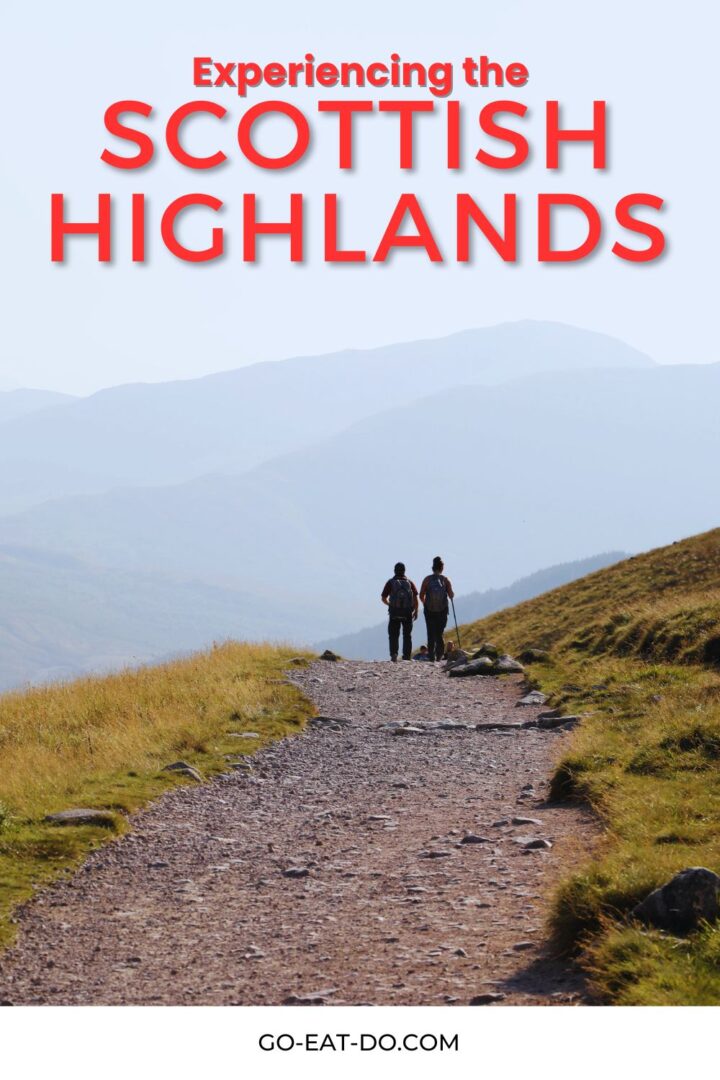
Staying with a family in Inverness, Isabella Sampson, from South Australia, experienced the Scottish Highlands like a local. She shares highlights of her time in the Highlands of Scotland.
Disclosure: Some of the links below and banners are affiliate links, meaning, at no additional cost to you, I will earn a commission if you click through and make a purchase.
The Scottish Highlands made me feel utterly alive. Heading north from Edinburgh, the landscape became increasingly rural, green, rugged and mountainous. Visiting was a long-awaited dream.
For me, an Australian, Scotland has long been a bucket-list destination. In addition to being surrounded by nature, the visit was an opportunity to spend time with my long-distance best friend, Niamh, whom I met while travelling in Canada. Catching up was ‘good craic’. She and her father, Iain, made me feel at home with them as their guest in Inverness.
Exploring the Scottish Highlands
Though the scenery stretches for hours, the Scottish Highlands are merely half the size of Tasmania. The entire region has a population of around 235,000 – fewer than the population of Hobart.
It is easy to feel tiny in this northern corner of the British mainland. Mountainous, verdant, dramatic scenery envelops visitors. Coming from coastal Australia, I had never seen a landscape like this and was in awe of my surroundings.
Visiting in midsummer, the land was cloaked with warmth. Long hours of daylight and pink late-night skies were ideal for sightseeing. When I was done, I drank at cosy pubs such as the Whitebridge Hotel, near Loch Ness, where quirky signage such as ‘dogs welcome, children tolerated, humans must be on a lead’ was displayed.
Clava Cairns and Outlander
I explored ancient sites such as Clava Cairns, the 4,000-year-old Bronze Age site near Inverness that inspired the fictional Craigh na Dun stone circle in the Outlander novels by Diana Gabaldon. Those books, and the resulting TV show, inspire thousands to travel to the highlands of Scotland.
Dipping into the cool crystal water of the Fairy Pools in the Isle of Skye’s Black Cuillin range was another highlight. So too was exploring the archaic interior of Eilean Donan Castle, on a tiny isle in Loch Duich – ‘Loch’, I learnt, is the Scottish Gaelic word for lake.
We drove to places of interest across the Scottish Highlands, exiting the car at viewing points to appreciate mountains and dark lochs. Trees seemed to clothe the hills in Aldourie, Dornie and Dores. Swathes of green enveloped Glenbrittle and Whitebridge. We never travelled far without spotting a fluffy sheep or a shaggy-haired Highland cow.
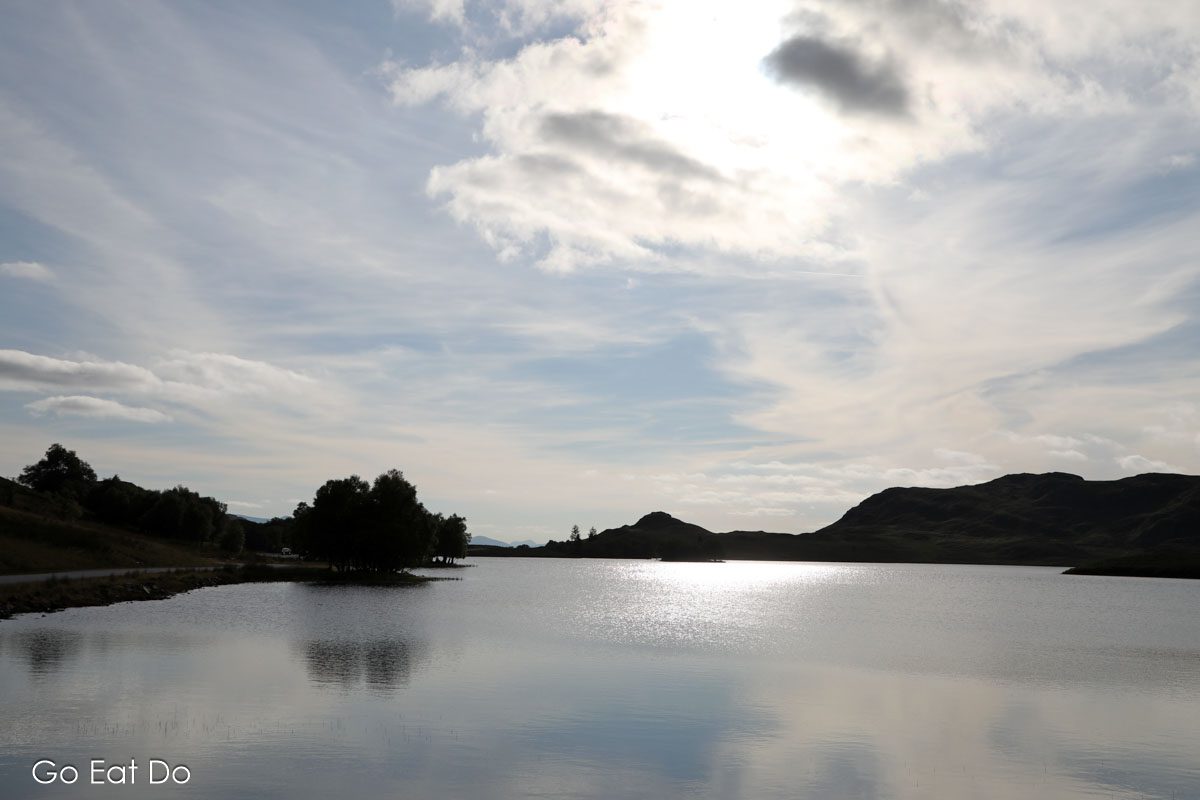
Visiting Dun da Lamh
History is palpable in the Scottish Highlands. Remnants of Pictish forts can be seen at Dun da Lamh and Dun Deardail. Viking raids preceded the formation of the Kingdom of Scotland. For centuries, society was organised around clans, which controlled territory as traditions evolved.
I found that the Scots have a deep-rooted pride and nostalgia for their country’s history and culture. Iain knowledgeably described the clan system. He was familiar with details of conflicts and flashpoints, including the 1746 Battle of Culloden, which was fought near Inverness. It felt eerie to drive past the spot of the bloody pitched battle that ended the Jacobite Rising and, with it, the traditional way of life of the Scottish Highlands’ clan system.
Iain explained that he was proud of the culture of the Scottish Highlands, explaining it has made a strong comeback in recent decades. Despite his knowledge, Iain said that he’s always eager to learn more.
Battle of Culloden’s aftermath
Following the Battle of Culloden, the Dress Act of 1746 repressed the wearing of traditional Highland dress, including kilts, by men and boys. Colourful tartan patterns were unique to each clan. Highland bagpipes and the Scottish Gaelic language were also repressed.
Despite efforts directed from London, tartans and bagpipes survived. Today, they thrive amid a rugged landscape dotted with castles and given a unique feel by a temperamental climate.
Social drinking in Scotland
The social drinking culture impressed me. Pubs and bars seemed to be at every turn in and around Inverness, by far the most populous urban area in the Scottish Highlands. Australia has a drinking culture too, so this helped me feel at home.
I soaked up the lilting accents around me and warmly teased friends for the gorgeous ‘oo’ sounds in their words. I picked up a new vocabulary, including ‘craic’ for a good time and ‘steaming’ for drunk.
After drinking locally crafted whisky and cider, my friend shared a particularly spooky ghost story about their great-grandfather. He was travelling by bicycle from one end of the Uist in the Outer Hebrides. Eerily, a monk walked on the ground above for much of the way, then mysteriously disappeared before his eyes – a strange and unsettling phenomenon that my friend’s ancestor never forgot.
Getting to know Scottish cuisine
Eating crab and lobster for the first time was an opportunity to learn how to break open their shells. I enjoyed roasts for dinner at the home of my hosts. Breakfast fry-ups with baked beans and eggs became normal. Contending with the throbbing aftermath of a good night out, I was encouraged to try haggis with my breakfast. The traditional Scottish dish contains the heart, liver and lungs of sheep and is mixed with oats and seasoning. In my mind, the experience of eating haggis will forever be associated with visiting Scotland.
I enjoyed visiting Inverness Castle and snapping a selfie by a ‘life-size’ wooden figure of the Loch Ness Monster by the River Ness. The Ness Islands dot the River Ness and form part of the Ladies Walk, where women would take daily strolls during the Victorian era.
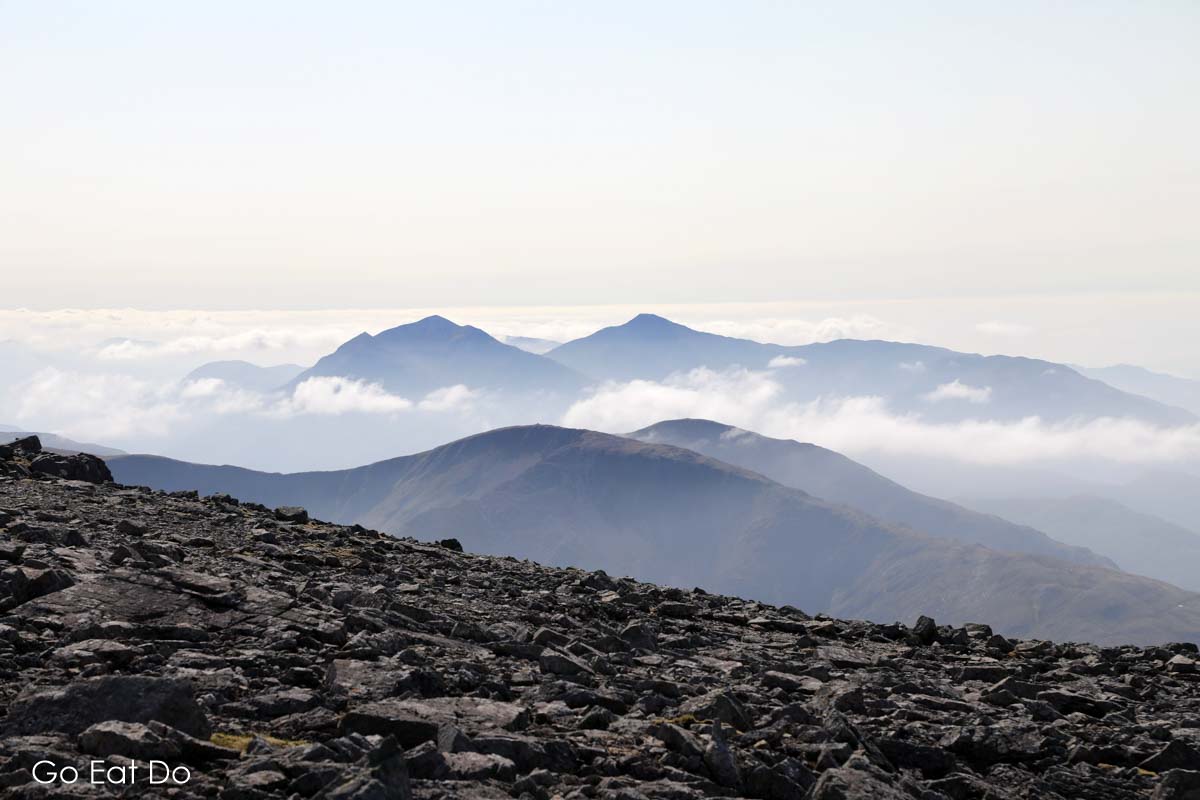
Swimming in Loch Ness
My hosts showed me the Highlands from their point of view. For that, I’m grateful. Memorably, we swam at Aldourie, a vast estate by Loch Ness. Underfoot, the shore felt sludgy. Initially, entering the water felt jarring. Ultimately, it was refreshing. The temperature of Loch Ness varies by just a single degree Celsius throughout the year. From the placid water, I remember gazing up at the hillside. Did I also catch a brief glimpse of Nessie in the distance?
Attending ceilidhs allowed me to learn the footwork and moves to participate in the traditional dances that bring people together during social occasions across Scotland. Another highlight was heading to Mieles Gelateria, the acclaimed ice cream parlour in Inverness.
The sweetest things I take away from my time in the Scottish Highlands are the memories. I already long to make the 10,000-mile (16,000-kilometre) journey again someday.
Place of interest in the Scottish Highlands
The map below marks the places of interest that Bella mentions in this post about visiting the Scottish Highlands:
Books about the Scottish Highlands
Looking for reading material with local relevance ahead of visiting the Scottish Highlands? The following books are available from Amazon:
Lonely Planet’s Scotland’s Highlands and Islands.
Diana Gabaldon’s Outlander.
Bob Pegg’s Highland Folk Tales.
David Taylor’s 111 Places in the Scottish Highlands That You Shouldn’t Miss.
Scottish History and Mythology by Billy Wellman.
Scotland: History of a Nation by David Ross.
Hotels in Inverness, Scotland
Search for hotels in Inverness and the Scottish Highlands using the map below:
About the author
Isabella Sampson is studying for a bachelor’s degree in Media and Sociology in South Australia. In her free time, she enjoys writing, socialising with friends and family, and working at her local pub. She dreams of travelling the world and becoming a renowned journalist. Follow her on Instagram.
Further information
The Visit Inverness and Loch Ness and Visit Scotland websites have details about things to do and see in the heart of the Scottish Highlands.
The photographs illustrating this post are by Why Eye Photography.
If you enjoyed this post, please sign up for the free Go Eat Do newsletter. It’s a hassle-free way of getting links to posts once a month.
‘Like’ the Go Eat Do Facebook page to see more photos and content.