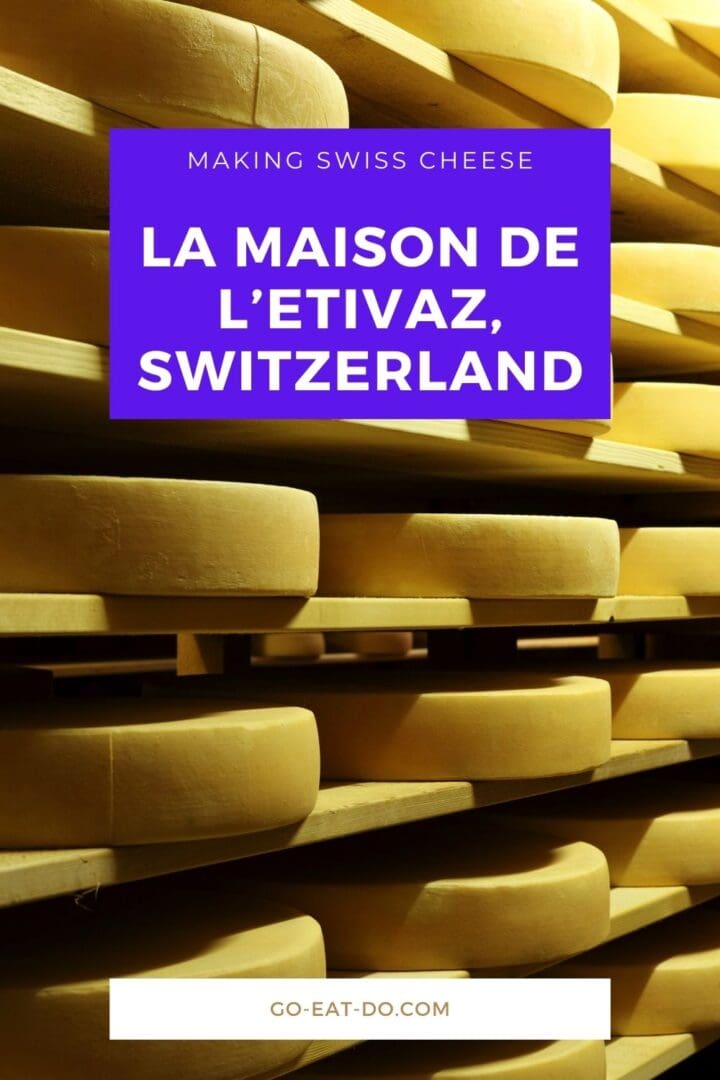
Stuart Forster visits Switzerland to find out about what goes into making Swiss cheese at La Maison de l’Etivaz.
Disclosure: Some of the links below and banners are affiliate links, meaning, at no additional cost to you, I will earn a commission if you click through and make a purchase.
Every autumn, the 70 Swiss families involved in the production of L’Etivaz mountain cheese learn how successful their year has been. Their wheels of cheese, stored within the modern cellars of La Maison de l’Etivaz, are weighed and purchased by the cooperative that controls the production process.
Cheese from Switzerland
The texture, colour, aroma and external appearance of the cheeses that have been delivered throughout the summer are assessed as part of strict quality controls that help maintain L’Etivaz’s regional Appellation d’Origine Protégée (AOP) quality certification.
In 2013, 445 tonnes of this hard cheese were produced. It is often compared to Gruyère, another Swiss cheese.
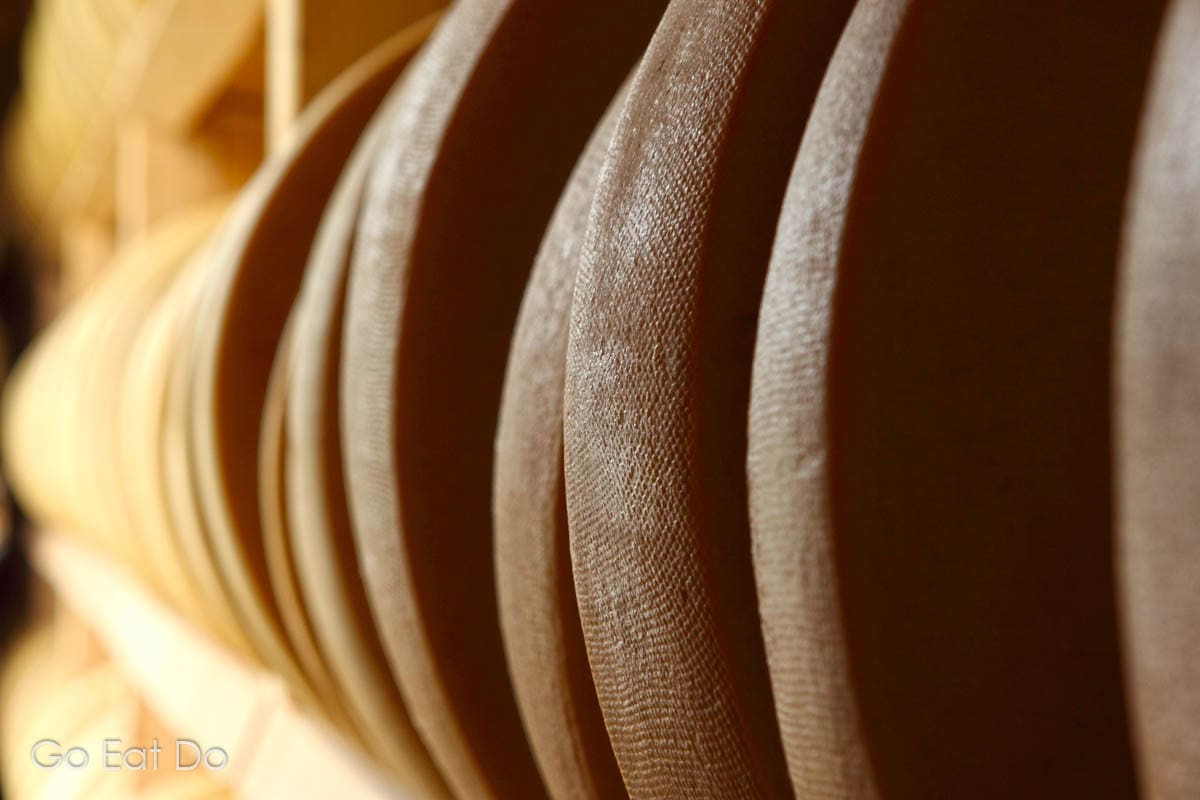
Artisanal Cheese
L’Etivaz cheese is produced only between 10th May and 10th October.
Milk from cows grazing on mountain pastures, at an altitude of between 1,000 (3,280 ft) and 2,000 metres (6,561 ft) above sea level, is utilised. This factor influences the character of the cheese as Alpine herbs and flora help give L’Etivaz its distinctive flavour. This Swiss cheese is a touch fruity with a nutty undertone.
Cows are milked each evening on 130 mountainside farms between Lake Geneva and Les Diablerets. Their milk stands overnight, allowing the cream to rise. It is then heated in copper cauldrons hung over wood fires. The traditional process would be familiar to cheesemakers living 500 years ago in the Alps.
Many people visualize Swiss cheese as riddled with holes. They are technically known as ‘eyes’ and are formed by bubbles. L’Etivaz is solid. Newly formed wheels of cheese are pressed overnight up in mountain chalets, helping to make the presence of eyes unlikely. They are then delivered to the chalet in L’Etivaz, a hamlet that is home to around 150 people.
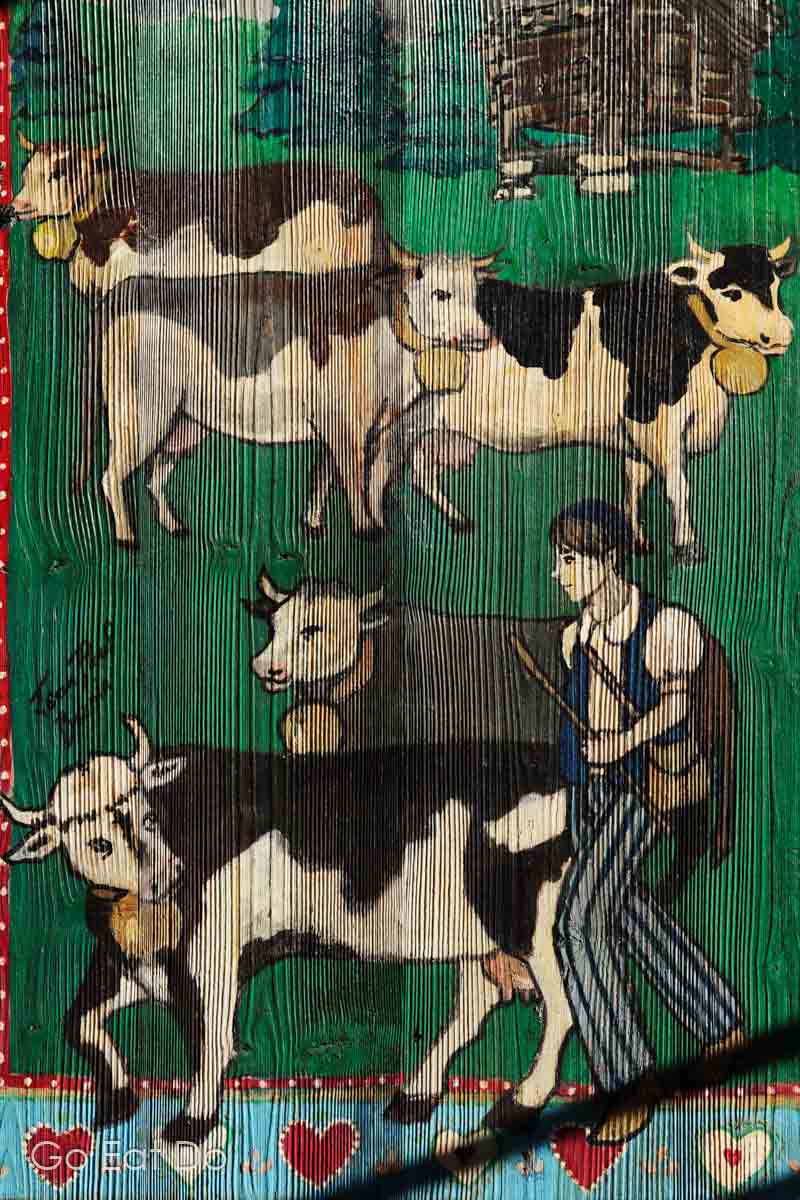
Ageing cheese in Switzerland
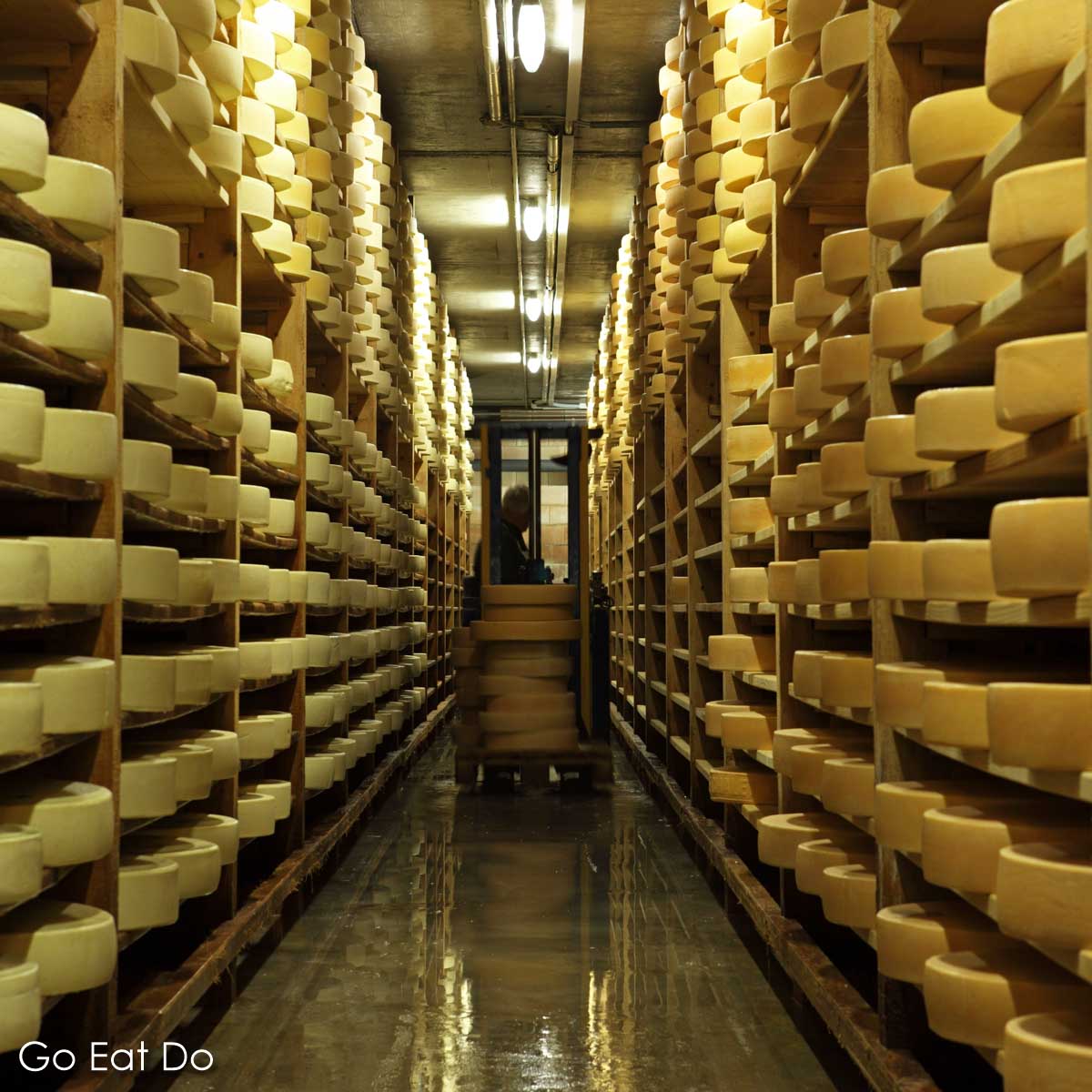
Cheese has been matured in the cellars of La Maison de L’Etivaz since 1934, two years after the cooperative’s foundation.
The ripening process takes a minimum of 135 days.
Some of the cheeses, which typically weigh between 15 and 35 kilograms (33 to 77 pounds, are matured for 22 months. The cheese becomes pale yellow as they mature.
Around 800 to 1,000 of the 17,000 to 19,000 cheeses delivered each summer are selected for extended ripening, lasting 30 months. These are eventually served as dry, intense tasting rolled shavings, known locally as rebibes.
When the white-coloured fresh cheeses are delivered to La Maison de L’Etivaz, they are steeped in a 22 per cent saline solution for 24 hours. This provides flavour and helps a crust to form.
The cheeses, which have a diameter of between 40 and 65 centimetres (around 16 inches to 25 inches, are then stacked on shelves for a week. They are turned daily and have salt rubbed into them. For the next 15 days, they are then rubbed with salt three times a week before being left to mature.
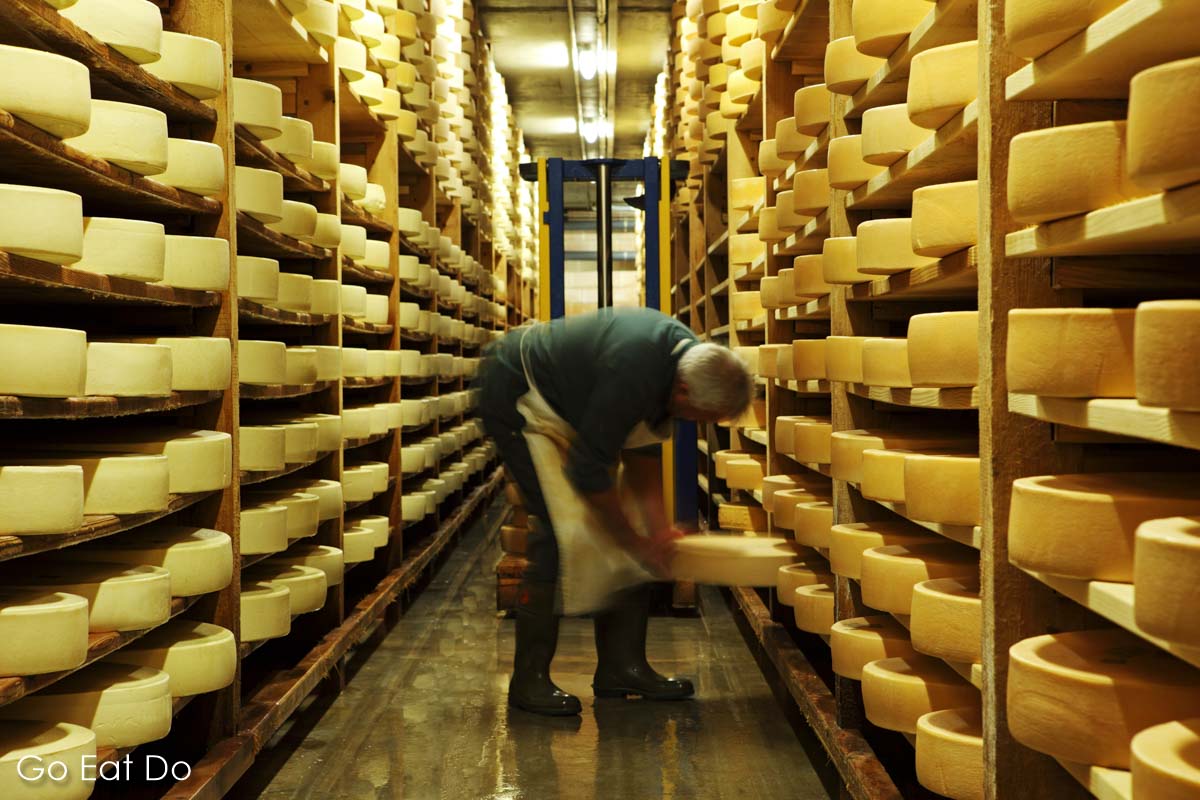
Mountain cheese
Each of the cheeses is marked with its maker’s number, allowing the annual output of each producer to be tracked.
La Maison de L’Etivaz has a delicatessen selling regional products and runs tours of its cellars.
Map of La Maison l’Etivaz
The map below shows the location of La Maison l’Etivaz:
Accommodation near l’Etivaz
The Hôtel de Ville (Grand Rue 70, 1660 Château-d’Oex, tel. +41 26 924 7477) has en suite, single to family-sized guestrooms and places you in the heart of Château-d’Oex. The hotel has a wood-panelled breakfast room and a bar with leather sofas.
Find and book hotels near La Maison de l’Etivaz using the map below:
Books about Switzerland
Interested in visiting La Maison de l’Etivaz during a trip to Switzerland? You can buy the following books from Amazon:
The DK Switzerland guidebook.
A Concise History of Switzerland
If you like cheese and good reads, check out Ned Palmer’s A Cheesemonger’s History of the British Isles.
La Maison de l’Etivaz
Visit the La Maison de l’Etivaz website for more details about L’Evitaz cheese and visiting the cellar.
See the Visit Geneva website to learn more about this part of Switzerland.
Further information
Thank you for visiting Go Eat Do and reading this post about Swiss cheese at La Maison de l’Etivaz. Thinking about visiting the region that makes this Swiss cheese? Take a look at these posts on Summertime in Switzerland’s Canton Vaud and Winter in Switzerland’s Lake Geneva Region.
This post was written by Stuart Forster. Stuart is an award-winning travel and food writer based in North East England.
Photos illustrating this post are by Why Eye Photography.
If you enjoyed reading this post, please sign up for the free Go Eat Do newsletter. It’s a hassle-free way of getting links to posts once a month.
‘Like’ the Go Eat Do Facebook page to see more photos and content.
A version of this post was initially published on Go Eat Do on 13 December 2014